
Politics
PM Modi Shifts Office to ‘Seva Teerth’ Tomorrow: Why the PMO’s New Address Signals a Symbolic Reset

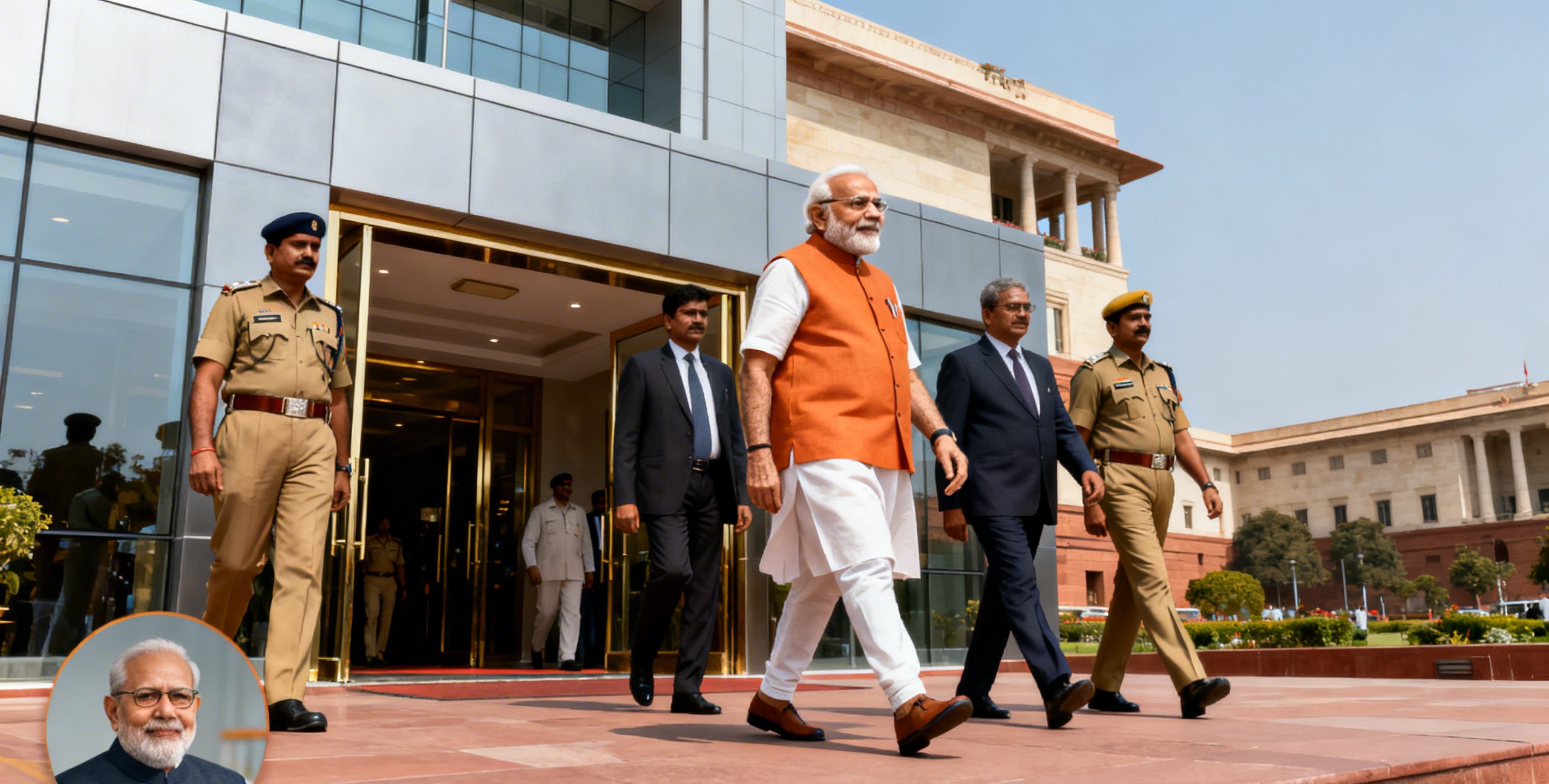
PM Modi Shifts Office to ‘Seva Teerth’ Tomorrow: Why the PMO’s New Address Signals a Symbolic Reset
In a move packed with symbolism and strategic messaging, Prime Minister Narendra Modi will shift his office to a new address named Seva Teerth tomorrow. The relocation marks a significant administrative and political moment for the Prime Minister’s Office (PMO), coming at a time when India is navigating key domestic and regional developments.
The decision to rename and relocate the PMO to ‘Seva Teerth’ has sparked widespread discussion in political circles. While officials describe it as part of a broader administrative restructuring, observers see deeper messaging rooted in governance philosophy and public outreach.
What Is ‘Seva Teerth’ and Why It Matters
The term ‘Seva Teerth’ translates roughly to a ‘pilgrimage of service’. The choice of name reflects a continued emphasis on service-driven governance — a theme that has defined much of the Modi government’s political narrative.
According to officials familiar with the development:
- The relocation aligns with administrative modernization efforts.
- The new premises are designed to enhance coordination between departments.
- The move reflects a symbolic rebranding of governance priorities.
The Prime Minister’s Office, which plays a central role in policy coordination, strategic decisions, and international diplomacy, will function from this new address beginning tomorrow.
Administrative Upgrade or Political Messaging?
The timing of the shift is notable. India is currently dealing with evolving regional dynamics, including developments in Bangladesh following the political rise of Tarique Rahman. Questions have been raised about whether India’s perceived ‘golden phase’ with Bangladesh may face recalibration.
Although the PMO relocation is officially unrelated to foreign policy shifts, political analysts believe optics matter. The symbolism of ‘Seva Teerth’ reinforces a narrative of disciplined governance amid geopolitical uncertainty.
Experts suggest three possible interpretations:
- Institutional Modernisation: Streamlining governance operations.
- Symbolic Reaffirmation: Reinforcing the service-first governance model.
- Political Reset Signal: Marking a new administrative phase ahead of upcoming policy cycles.
How the Move Impacts Governance
Sources indicate that the new office infrastructure includes upgraded communication systems, enhanced security frameworks, and integrated digital monitoring facilities. This could improve inter-ministerial coordination and faster decision-making.
The PMO serves as the nerve centre of India’s executive branch. Any structural shift, even symbolic, carries administrative implications.
Key Functions of the PMO Include:
- Policy oversight and review
- Coordination between ministries
- Strategic national security briefings
- International diplomatic engagement
- Public grievance redressal
Officials maintain that the relocation will not disrupt ongoing work. Instead, they describe it as an effort to strengthen institutional efficiency.
Political Reactions and Public Sentiment
Reactions from political parties have been measured so far. While supporters view the shift as consistent with Modi’s governance branding, critics argue that symbolic gestures must translate into measurable outcomes.
Public sentiment, especially on social media, reflects curiosity about the deeper implications of the name ‘Seva Teerth’. The phrase resonates strongly with cultural undertones of duty and service.
Over the years, Prime Minister Modi has frequently invoked themes of ‘seva’ or service in public addresses. The renaming of the PMO address appears aligned with that consistent messaging.
Regional Context: Bangladesh Factor
The development also unfolds amid political changes in Bangladesh. The emergence of Tarique Rahman has sparked debates about the future trajectory of India-Bangladesh ties.
India and Bangladesh have shared close strategic and economic cooperation in recent years. However, evolving political leadership in Dhaka may reshape certain diplomatic dynamics.
While the PMO’s relocation is domestic in nature, policy observers note that administrative recalibrations often coincide with broader governance reassessments.
Why This Moment Is Significant
The relocation is not merely about a change of address. It reflects:
- A reaffirmation of governance philosophy
- Administrative restructuring for efficiency
- Symbolic continuity of service-oriented leadership
As India continues its economic growth trajectory and navigates regional complexities, the shift to ‘Seva Teerth’ underscores a narrative of disciplined governance and institutional stability.
What Happens Next?
Beginning tomorrow, all official communications from the Prime Minister’s Office will carry the new address. Government departments have already been notified of the change.
The coming weeks will reveal whether the relocation leads to visible administrative acceleration or remains primarily symbolic.
FAQs
1. Why is PM Modi shifting his office?
The relocation to ‘Seva Teerth’ is described as part of administrative modernization and symbolic reaffirmation of service-oriented governance.
2. Does this affect government functioning?
Officials state there will be no disruption. The new office is designed to improve efficiency and coordination.
3. Is the move linked to Bangladesh’s political changes?
There is no official link. However, the timing coincides with evolving regional political developments.
4. What does ‘Seva Teerth’ mean?
The phrase signifies a pilgrimage dedicated to service, reinforcing themes frequently emphasized in the Prime Minister’s public messaging.
5. When does the new PMO address take effect?
The new address becomes effective tomorrow, with all official communications reflecting the change.
As Prime Minister Narendra Modi steps into ‘Seva Teerth’, the move carries both administrative weight and symbolic resonance. Whether it marks a deeper governance shift or remains a powerful message of continuity will unfold in the months ahead.

Politics
Ajit Pawar Plane Crash Twist: Black Boxes Damaged in Fire, AAIB Confirms – What It Means for the Investigation
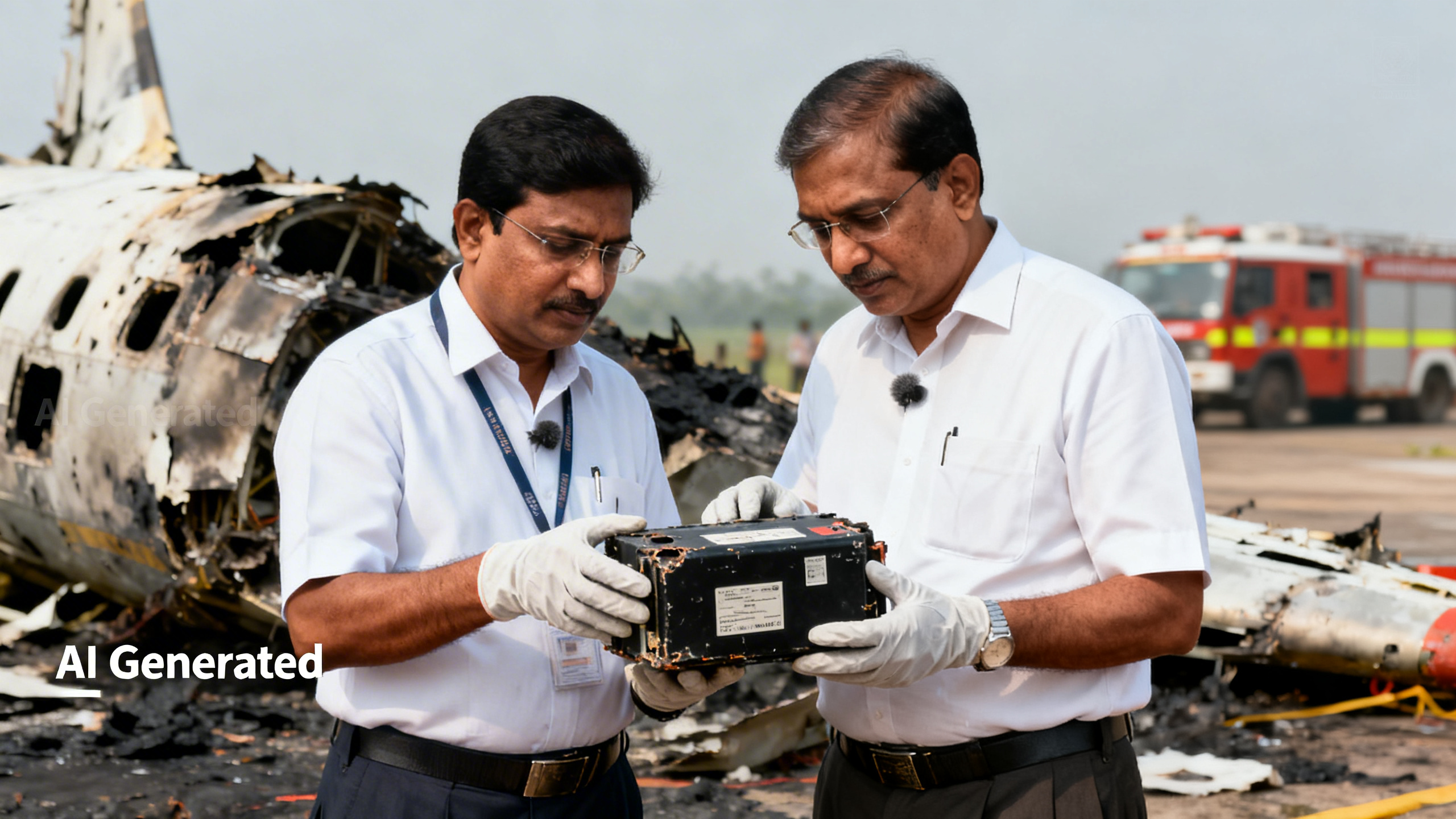
Ajit Pawar Plane Crash Twist: Black Boxes Damaged in Fire, AAIB Confirms – What It Means for the Investigation
The investigation into the aircraft incident involving senior Maharashtra leader Ajit Pawar has taken a serious turn.
The Aircraft Accident Investigation Bureau (AAIB) has confirmed that the plane’s black boxes were damaged in the post-incident fire, raising concerns about the recovery of crucial flight data.
Officials say recovery efforts are underway, but the extent of the damage could impact the pace and depth of the probe.
AAIB Confirms Damage to Flight Recorders
The AAIB, India’s apex body for aircraft accident investigations, stated that both the Flight Data Recorder (FDR) and Cockpit Voice Recorder (CVR) suffered fire-related damage.
These devices, commonly referred to as black boxes, are critical in reconstructing the final moments of any aircraft incident.
- FDR records technical flight parameters
- CVR captures cockpit conversations
- Both are designed to withstand high impact and extreme heat
However, investigators indicated that intense heat from the fire may have affected data storage components.
Why Black Boxes Matter in Aviation Probes
Black boxes are central to determining the cause of aviation incidents.
They help investigators analyse:
- Engine performance data
- Altitude and speed readings
- Pilot communication
- Warning alarms inside the cockpit
If the internal memory units are compromised, investigators may have to rely more heavily on secondary evidence such as air traffic control recordings, maintenance logs, and eyewitness accounts.
Extent of Fire Damage Under Assessment
According to preliminary inputs, the aircraft caught fire shortly after the incident. Fire response teams acted swiftly, but significant portions of the fuselage were affected.
Officials clarified that the black boxes were recovered from the debris and have been sent to a specialised laboratory for detailed analysis.
Experts suggest that even in severe cases, partial data recovery is often possible through advanced forensic techniques.
Investigation Timeline: What Happens Next?
The AAIB will now attempt to extract usable data from the damaged recorders.
If domestic facilities are unable to retrieve complete information, the devices may be sent abroad for advanced forensic recovery.
Standard procedure includes:
- Securing the crash site
- Documenting debris patterns
- Examining maintenance history
- Interviewing crew and ground staff
- Analysing meteorological conditions
A preliminary report is typically issued within weeks, while the final report may take several months.
Was Ajit Pawar on Board?
Authorities have not indicated any injuries to Ajit Pawar in connection with the aircraft fire incident.
Officials confirmed that all passengers and crew were accounted for, and safety protocols were followed.
Further clarity is expected once the AAIB releases its official preliminary findings.
Aviation Safety in Focus
The incident has once again brought attention to aviation safety standards in India.
India follows stringent civil aviation norms aligned with international standards. Aircraft are required to undergo periodic maintenance and safety audits.
Industry experts note that even when black boxes are damaged, global best practices allow investigators to reconstruct events using layered evidence.
Can Data Still Be Recovered?
Yes, in many cases.
Black boxes are built to withstand:
- Temperatures up to 1,100°C
- Severe impact forces
- Deep water immersion
Even if outer casings appear damaged, memory chips inside may remain intact.
Technical teams will now determine whether the storage modules survived the fire.
Political and Public Reactions
The development has sparked widespread attention across Maharashtra’s political circles.
Leaders from across parties have called for a transparent and swift investigation.
Officials have urged the public to avoid speculation until the AAIB completes its scientific analysis.
Key Takeaways So Far
- AAIB confirms black boxes were damaged in fire
- Data recovery efforts are underway
- No confirmed reports of serious injuries
- Preliminary findings expected in coming weeks
The focus now shifts to forensic recovery and technical assessment.
Frequently Asked Questions (FAQs)
1. What did AAIB confirm about the Ajit Pawar plane incident?
The AAIB confirmed that the aircraft’s black boxes were damaged due to fire following the incident.
2. Can investigators still retrieve data from damaged black boxes?
Yes, experts often recover partial or complete data using advanced forensic techniques.
3. What is the role of black boxes in aircraft investigations?
They record flight data and cockpit audio, helping investigators reconstruct events.
4. How long will the investigation take?
A preliminary report may be issued within weeks, but the final report could take months.
5. Were there any casualties reported?
Authorities have not confirmed any serious injuries at this stage.
As investigators begin the delicate task of data recovery, the damaged black boxes remain central to uncovering the full sequence of events. Until then, officials stress patience, transparency, and adherence to established aviation investigation protocols.
Politics
Political Shock in Assam: Days After Quitting Congress, Bhupen Borah Meets Himanta Biswa Sarma; BJP Entry Likely Soon
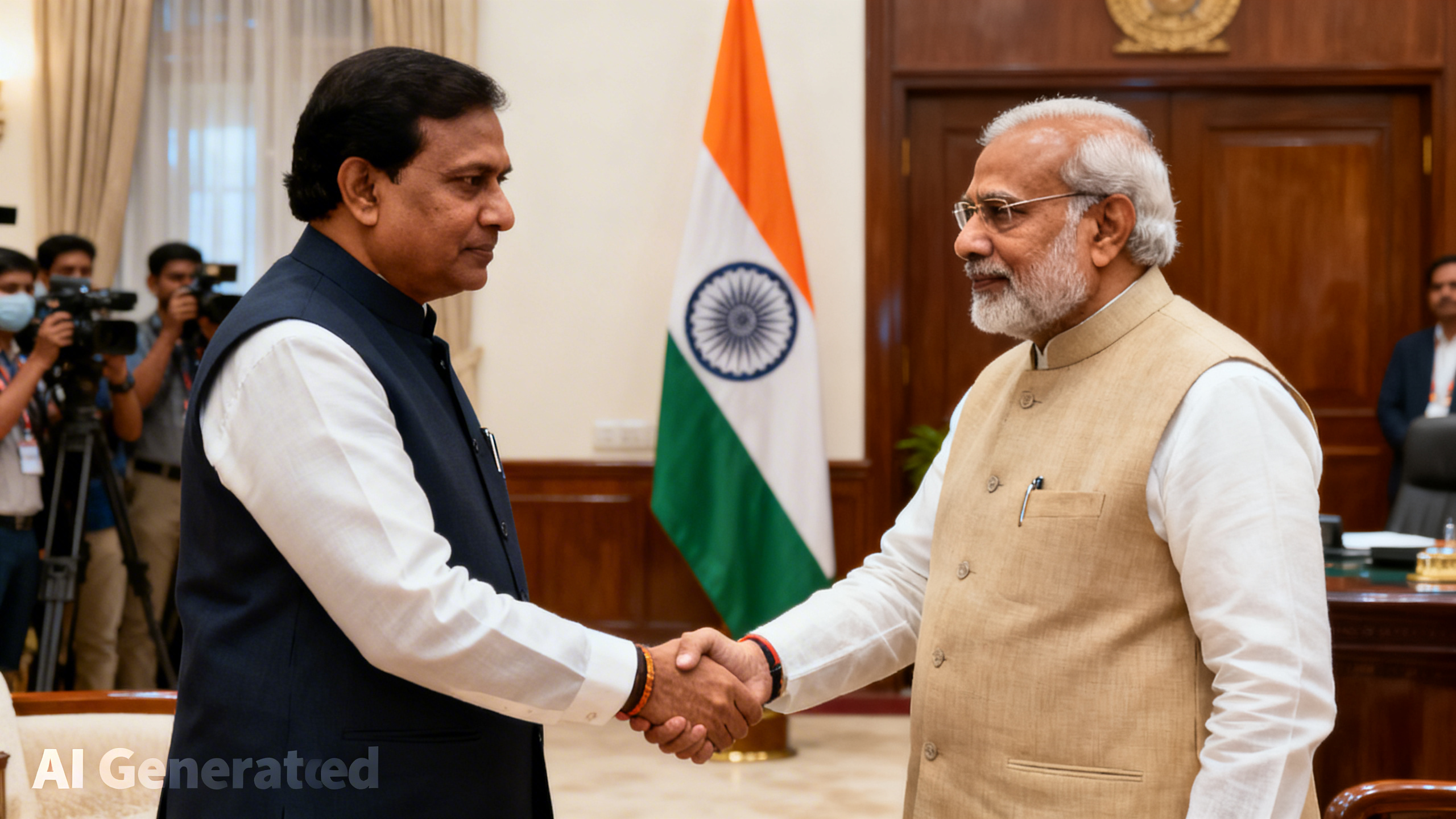
Political Shock in Assam: Days After Quitting Congress, Bhupen Borah Meets Himanta Biswa Sarma; BJP Entry Likely Soon
Assam’s political landscape witnessed a dramatic turn as Bhupen Kumar Borah met Chief Minister Himanta Biswa Sarma just days after resigning from the Congress party. The meeting has triggered intense speculation that Borah may soon join the Bharatiya Janata Party (BJP), setting the stage for a major realignment in state politics.
The high-profile interaction comes at a time when Assam’s political equations are already in flux. Sources indicate that discussions between the two leaders were cordial and focused on “future cooperation,” further fueling talk of an imminent switch.
From Congress Exit to BJP Talks: What Happened?
Bhupen Borah’s resignation from Congress earlier this week shocked party workers and observers. While he cited “personal and political reasons,” insiders suggest deeper differences over strategy and leadership direction in Assam.
Within days of stepping down, Borah’s meeting with Himanta Biswa Sarma has intensified buzz across political circles. The swift sequence of events suggests that backchannel discussions may have been underway for some time.
Key Developments So Far
- Borah resigns from Congress citing ideological and strategic concerns.
- Meeting held with Chief Minister Himanta Biswa Sarma in Guwahati.
- BJP leaders remain officially cautious but welcoming.
- Congress calls the move “opportunistic politics.”
Why This Move Matters for Assam Politics
Bhupen Borah has been an influential figure in Assam politics. His grassroots connect and organizational experience make him a significant addition to any political party.
If Borah formally joins the BJP, it could strengthen the ruling party’s hold in key constituencies, especially in Upper Assam. The development may also signal further weakening of Congress in the Northeast.
Political analysts believe the timing is crucial. With upcoming electoral battles and internal churn within opposition ranks, Borah’s shift could reshape alliances and campaign strategies.
Himanta Biswa Sarma’s Expanding Influence
Chief Minister Himanta Biswa Sarma has emerged as one of the most influential BJP leaders in the Northeast. Known for his strategic acumen, Sarma himself switched from Congress to BJP in 2015, a move that significantly altered Assam’s political trajectory.
Observers note the parallel between Sarma’s own political journey and Borah’s current transition. The BJP leadership has consistently emphasized expansion and consolidation in the region, and Borah’s potential entry aligns with that approach.
Political Signals to Watch
- Official announcement from BJP leadership.
- Possible induction ceremony in Guwahati or Delhi.
- Reactions from national Congress leaders.
- Impact on upcoming elections in Assam.
Congress Faces Another Setback?
For Congress, Borah’s exit adds to its ongoing challenges in Assam. The party has struggled to regain lost ground since the BJP’s rise in the state.
Senior Congress leaders have downplayed the development publicly, stating that the party remains united. However, political observers suggest that such high-profile exits can dent morale at the grassroots level.
The opposition alliance dynamics in Assam may also be affected, particularly if more leaders consider switching sides.
What Bhupen Borah Said
While Borah has not officially confirmed joining the BJP, he acknowledged meeting Himanta Biswa Sarma. He described the interaction as “constructive” and emphasized his commitment to Assam’s development.
He refrained from commenting directly on speculation about joining the BJP, saying that he would “make decisions in the interest of the people.”
Possible Political Impact
If the move materializes, experts predict several outcomes:
- Strengthening of BJP’s organizational structure in Assam.
- Further erosion of Congress influence in the Northeast.
- Realignment of opposition alliances.
- Increased political competition in key constituencies.
Political developments in Assam often have ripple effects across the Northeast. Therefore, Borah’s potential switch is being closely watched beyond state borders.
What Happens Next?
The coming days are expected to bring clarity. BJP insiders suggest that formal induction could happen soon if discussions conclude positively.
Meanwhile, Congress may attempt damage control by consolidating its remaining leadership and strengthening its grassroots network.
As Assam gears up for future political battles, this development underscores the fluid nature of party loyalties and the strategic calculations shaping Indian politics today.
Frequently Asked Questions (FAQs)
1. Did Bhupen Borah officially join the BJP?
No official announcement has been made yet, but his meeting with Himanta Biswa Sarma has fueled strong speculation.
2. Why did Bhupen Borah leave Congress?
He cited political and ideological reasons, though insiders suggest internal disagreements played a role.
3. How could this impact Assam politics?
If Borah joins the BJP, it could strengthen the ruling party and weaken Congress in key constituencies.
4. When will an official decision be announced?
Political sources indicate that clarity may emerge in the coming days.
5. Has BJP confirmed his induction?
BJP leaders have not made a formal statement yet, maintaining cautious optimism.
Politics
Shock Move in Maharashtra: 5% Muslim Reservation Scrapped, Political Storm Erupts Ahead of Crucial Decisions
Shock Move in Maharashtra: 5% Muslim Reservation Scrapped, Political Storm Erupts Ahead of Crucial Decisions
In a major policy shift that has sparked intense political debate, the Maharashtra government has scrapped the 5% reservation for Muslims in the state. The decision has triggered sharp reactions from political parties, community leaders and legal experts, setting the stage for a fresh round of confrontation over affirmative action policies.
The move comes amid heightened discussions on caste-based and community-based reservations across India. With elections and policy recalibrations underway, the decision is being viewed as both administrative and deeply political.
What Was the 5% Muslim Reservation in Maharashtra?
The 5% reservation for Muslims in Maharashtra primarily applied to educational institutions. It was introduced under the Socially and Educationally Backward Category (SEBC) framework during a previous state government.
The quota aimed to support economically and socially disadvantaged sections within the Muslim community, particularly in access to higher education.
- Applicable mainly in educational admissions
- Focused on backward segments within the Muslim community
- Implemented under a specific state government policy framework
However, the policy had faced legal scrutiny and political opposition since its inception.
Why Has the Reservation Been Scrapped?
According to government sources, the decision was taken following administrative review and legal considerations. Officials indicated that the quota did not align with current constitutional interpretations regarding religion-based reservations.
India’s Constitution prohibits reservations solely on religious grounds. Affirmative action must be based on social and educational backwardness rather than religion alone.
Sources suggest the government believes the earlier framework lacked strong empirical backing that could withstand judicial scrutiny.
Political Reactions Intensify
The announcement immediately triggered political reactions across Maharashtra.
Opposition parties accused the government of targeting minorities and politicising reservation policies. They alleged the move could marginalise already vulnerable communities.
Meanwhile, leaders from the ruling coalition defended the decision, arguing that:
- Reservations must be constitutionally sound
- Policies should withstand judicial review
- Benefits should reach genuinely backward sections through legally sustainable categories
Several leaders have hinted that alternative mechanisms could be explored to ensure educational access without violating constitutional provisions.
Legal and Constitutional Context
Courts in India have consistently maintained that reservations cannot be granted solely on the basis of religion. Any affirmative action must be backed by data proving social and educational backwardness.
The Supreme Court’s landmark judgments on reservation caps and criteria have shaped how states design quota systems. The 50% ceiling on reservations, though debated, remains a significant benchmark.
Legal experts say that unless a community is identified as backward through quantifiable data, religion alone cannot serve as the basis for reservation benefits.
Impact on Students and Institutions
The immediate concern now shifts to students who were expecting to benefit from the 5% quota in upcoming admissions.
Education sector observers warn that:
- Admission processes may need recalibration
- Seat matrices in colleges could change
- Students from affected categories may need to apply under alternative classifications
Some institutions are awaiting formal government notifications detailing how the revised framework will be implemented.
Broader Reservation Debate in Maharashtra
Maharashtra has witnessed intense debates over reservation policies in recent years. From Maratha quota movements to OBC classification disputes, affirmative action remains a politically sensitive subject in the state.
The scrapping of the Muslim quota adds another layer to the ongoing conversation around:
- Balancing constitutional mandates
- Ensuring social justice
- Maintaining the overall reservation cap
Political analysts believe the move may reshape alliances and electoral narratives in the coming months.
What Happens Next?
The decision could face legal challenges. Community organisations and advocacy groups are reportedly examining their options, including approaching the courts.
If challenged, the judiciary may once again examine the larger question of how states can structure reservations for socially backward groups without crossing constitutional limits.
For now, the government appears firm in its stance that reservation policies must be data-driven, legally defensible and aligned with constitutional principles.
Frequently Asked Questions (FAQs)
1. Was the 5% reservation for Muslims applicable to jobs as well?
The primary focus of the 5% quota was educational institutions. Its scope in employment was limited and subject to legal challenges.
2. Why can’t reservations be based only on religion?
The Indian Constitution prohibits discrimination solely on religious grounds. Reservations must be based on social and educational backwardness supported by data.
3. Will affected students lose existing benefits?
Students who have already secured admissions are unlikely to be immediately affected, but future admissions will follow the revised policy framework.
4. Can the decision be challenged in court?
Yes. Any policy decision by a state government can be challenged if petitioners believe it violates constitutional provisions or existing legal protections.
5. Could a new framework replace the scrapped quota?
The government may explore alternative classifications based on backwardness criteria, but any new system must comply with constitutional guidelines.
The scrapping of the 5% Muslim reservation in Maharashtra marks a significant moment in the state’s evolving reservation landscape. As legal debates intensify and political rhetoric sharpens, the coming weeks will determine whether this decision stands firm or triggers another courtroom battle in India’s complex affirmative action journey.


Ajit Pawar Plane Crash Twist: Black Boxes Damaged in Fire, AAIB Confirms – What It Means for the Investigation

Ramadan 2026 Moon Sighting Live: Gulf Nations Confirm Start of Holy Month; Dubai Revises Public Sector Working Hours

Stock Market Today: Key Global Cues, Nifty & Sensex Levels — All You Need To Know Before Trading On Feb 18

Andhra Pradesh Budget 2026: ₹3.32 Lakh Crore Mega Outlay Announced, ₹8.3 Crore Earmarked for VB G RAM-G Scheme

Nvidia CEO Jensen Huang Skips India AI Summit Next Week, Company Confirms—What It Means for India’s Tech Ambitions

Pulwama Attack: Why February 14 Is Observed as Black Day Across India
-
 Politics6 days ago
Andhra Pradesh Budget 2026: ₹3.32 Lakh Crore Mega Outlay Announced, ₹8.3 Crore Earmarked for VB G RAM-G Scheme
-
 Business6 days ago
Nvidia CEO Jensen Huang Skips India AI Summit Next Week, Company Confirms—What It Means for India’s Tech Ambitions
-
 Blog6 days ago
Pulwama Attack: Why February 14 Is Observed as Black Day Across India
-

 Sports6 days ago
T20 World Cup 2026 Match 23: ENG vs SCO Prediction – Will England Dominate or Can Scotland Script a Historic Upset?
-
 Blog6 days ago
Mumbai Metro Horror: Under-Construction Pillar Collapses in Mulund, 1 Dead, 3 Injured as Safety Questions Emerge
-
 Politics6 days ago
Supreme Court to Hear Pleas Seeking FIR Against Assam CM Himanta Biswa Sarma on Feb 16: What’s at Stake?
-
International6 days ago
Hindu Extremism and…’: BNP Chief Tarique Rahman Adviser’s Explosive Remark on India Ties Sparks Political Storm After Bangladesh Shock
-
 Politics2 days ago
Ajit Pawar Plane Crash Twist: Black Boxes Damaged in Fire, AAIB Confirms – What It Means for the Investigation