
Blog
Mumbai Metro Horror: Under-Construction Pillar Collapses in Mulund, 1 Dead, 3 Injured as Safety Questions Emerge

Mumbai Metro Horror: Under-Construction Pillar Collapses in Mulund, 1 Dead, 3 Injured as Safety Questions Emerge
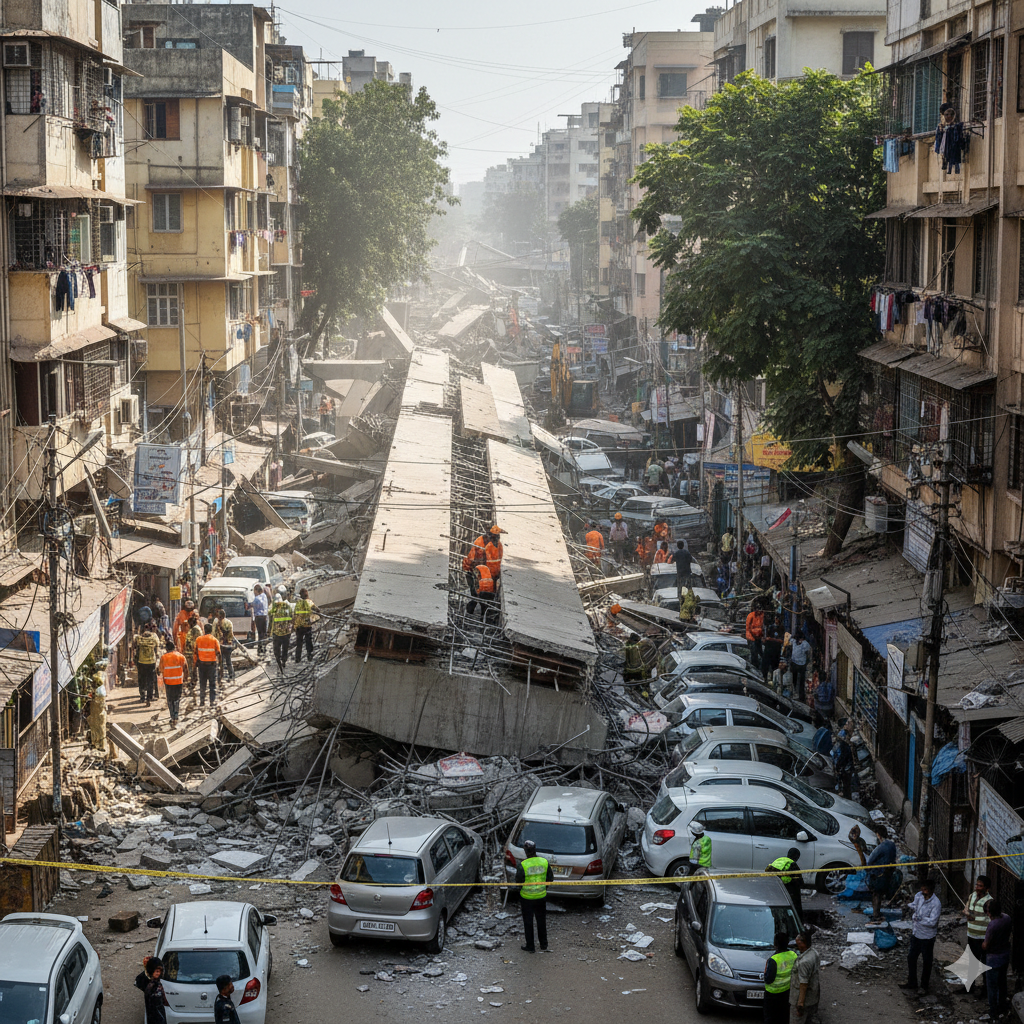
A routine weekday morning in Mumbai turned tragic after a portion of an under-construction Mumbai Metro pillar collapsed in Mulund, leaving one person dead and three others injured. The shocking incident has raised serious concerns about construction safety standards in one of India’s most ambitious urban infrastructure projects.
Authorities confirmed that the collapse occurred at an active metro construction site in Mulund, a busy suburb in the city’s eastern corridor. Emergency teams rushed to the spot within minutes as locals gathered in panic.
What Happened in Mulund?
According to preliminary information from civic officials, a section of a reinforced concrete metro pillar gave way during ongoing construction work. The debris fell onto the ground below, trapping workers and injuring bystanders nearby.
Officials stated that:
- One person was declared dead at the hospital.
- Three others sustained injuries and are undergoing treatment.
- Rescue operations were completed within hours.
- Structural assessment of nearby pillars has begun.
Police and fire brigade teams cordoned off the area to prevent further risks.
Victims and Rescue Efforts
Eyewitnesses described a loud cracking sound moments before the structure partially collapsed. Workers reportedly attempted to flee, but falling debris struck several individuals.
Local residents were among the first responders, helping lift debris before emergency services arrived. The injured were transported to nearby hospitals for urgent medical care.
Authorities have not yet released the identity of the deceased pending family notification.
Immediate Action by Authorities
Mumbai civic officials and metro authorities initiated a technical inspection immediately after the incident. Senior engineers reached the site to assess structural integrity.
Officials confirmed:
- Construction work at the affected stretch has been temporarily halted.
- A detailed structural audit has been ordered.
- A probe committee will examine the cause of failure.
- Contractor accountability will be reviewed.
The exact cause of the collapse remains under investigation.
Safety Concerns Around Mega Infrastructure Projects
Mumbai’s Metro expansion has transformed the city’s transportation landscape. However, construction-related incidents periodically trigger public concern.
Urban development experts stress that large-scale infrastructure projects demand strict adherence to safety protocols, including:
- Regular quality checks of concrete and steel reinforcements.
- Independent third-party safety audits.
- Strict monitoring of on-site engineering supervision.
- Worker safety training and compliance.
Any lapse in these areas can lead to catastrophic consequences.
Impact on Traffic and Local Residents
The collapse caused temporary traffic disruptions in Mulund. Police diverted vehicles to alternate routes as cranes and rescue equipment occupied part of the roadway.
Commuters experienced delays during peak hours. Local shopkeepers expressed concern over repeated disruptions due to ongoing metro work.
Authorities have assured residents that structural stability checks will be completed before construction resumes.
Engineering Questions Under Scrutiny
While investigations continue, experts suggest that pillar collapses may occur due to:
- Improper curing of concrete.
- Design miscalculations or load imbalance.
- Foundation instability.
- Material quality compromise.
Officials have not confirmed any of these factors yet, emphasizing that conclusions will follow a scientific review.
Political and Administrative Response
Local representatives visited the site and extended condolences to the victim’s family. Authorities have promised compensation as per state guidelines.
Government sources stated that safety compliance reports will be reviewed across all ongoing metro corridors to prevent recurrence.
Public Reaction
The incident has triggered widespread discussion on social media, with citizens demanding transparency and stricter monitoring of infrastructure projects.
Many residents highlighted the need for real-time public disclosure of safety audits, especially in densely populated areas.
What Happens Next?
The coming days will be crucial as forensic engineers examine the debris and construction records. Investigators will analyze:
- Blueprints and structural calculations.
- Material procurement records.
- On-site supervision logs.
- Recent inspection reports.
Depending on findings, accountability may extend to contractors, consultants, or supervisory authorities.
FAQs
How many people were affected in the Mulund metro pillar collapse?
One person died and three others were injured in the incident.
Has construction work been stopped?
Yes, authorities have temporarily halted construction at the affected stretch pending investigation.
What caused the metro pillar to collapse?
The exact cause is under investigation. Officials have ordered a detailed structural audit.
Will the Mumbai Metro project face delays?
Authorities have not confirmed any major delays yet, but safety inspections may impact timelines in the short term.
Conclusion
The Mulund metro pillar collapse serves as a stark reminder of the risks associated with rapid urban infrastructure development. While Mumbai continues its push toward modern transport solutions, public safety remains non-negotiable.
As investigations unfold, citizens await clear answers. For now, a grieving family and injured workers stand at the center of a tragedy that demands accountability and reform.

Pulwama Attack: Why February 14 Is Observed as Black Day Across India
February 14 is known globally as Valentine’s Day. But in India, the date carries a far deeper and painful meaning. Every year, the nation observes this day as Black Day to remember the 40 CRPF personnel who lost their lives in the 2019 Pulwama terror attack.
The incident shook the country, triggered national outrage, and altered India’s security and diplomatic posture. Even years later, the memory of Pulwama continues to evoke grief, anger, and reflection.
What Happened on February 14, 2019?
On February 14, 2019, a convoy of the Central Reserve Police Force (CRPF) was travelling on the Jammu-Srinagar National Highway in Jammu and Kashmir’s Pulwama district.
A suicide bomber rammed an explosive-laden vehicle into one of the buses carrying security personnel. The massive blast killed 40 jawans and injured many others.
The Pakistan-based terror group Jaish-e-Mohammed claimed responsibility for the attack. It was one of the deadliest assaults on Indian security forces in Kashmir in decades.
Key Facts About the Pulwama Attack
- Date: February 14, 2019
- Location: Lethpora area, Pulwama district, Jammu and Kashmir
- Security personnel killed: 40 CRPF jawans
- Type of attack: Suicide car bombing
- Terror group involved: Jaish-e-Mohammed
Why Is February 14 Observed as Black Day?
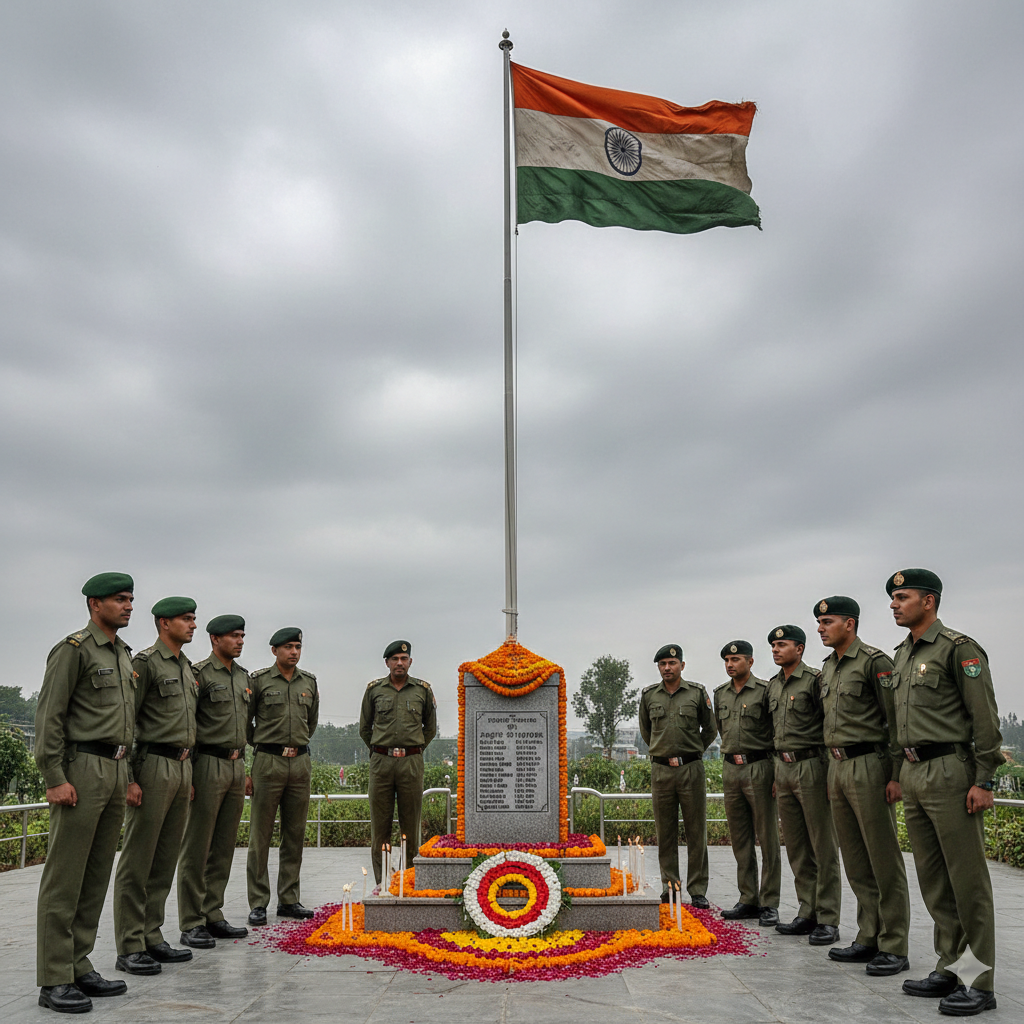
India observes February 14 as Black Day to honour the martyrs and to remember the sacrifice made by the fallen soldiers.
The term “Black Day” signifies national mourning. It reflects the deep emotional scar the attack left on millions of Indians.
Across the country, citizens, political leaders, armed forces personnel, and families of the martyrs pay tribute through:
- Wreath-laying ceremonies
- Moments of silence
- Candle marches
- Social media tributes
- Memorial events at schools and institutions
The Pulwama martyrs’ memorial in Jammu and Kashmir has become a symbol of remembrance and resilience.
How the Pulwama Attack Changed India’s Response to Terror
The Pulwama attack was not just another security incident. It marked a turning point in India’s counter-terror policy.
Within days, India launched airstrikes on a Jaish-e-Mohammed training camp in Balakot, Pakistan. The operation signaled a shift toward a more assertive cross-border response to terror threats.
Diplomatic tensions between India and Pakistan escalated sharply. International pressure mounted on Pakistan to act against terror outfits operating from its soil.
India also intensified internal security measures in Jammu and Kashmir, including stricter surveillance and convoy movement protocols.
The Human Cost Behind the Headlines
Beyond geopolitics and military strategy, Pulwama remains a story of personal loss.
The 40 CRPF personnel came from different states, backgrounds, and families. Many were sole breadwinners. Some had young children. Others were just months away from retirement.
Their stories are retold every year as families visit memorials, share memories, and demand justice.
The nation’s collective remembrance is rooted in these individual sacrifices.
National Sentiment: Grief, Anger, and Unity
Immediately after the attack, India witnessed widespread protests and candlelight vigils. Citizens donated to the families of the martyrs in large numbers.
The incident unified the country in grief. Political differences were momentarily set aside as leaders across party lines condemned the attack.
February 14 has since become a day when social media timelines fill with photos of the fallen jawans and messages like “Never Forget Pulwama.”
Security and Policy Developments Since 2019
Following the attack, the government reviewed convoy movement protocols and intelligence coordination systems.
- Improved highway sanitisation procedures
- Enhanced surveillance in sensitive zones
- Stronger counter-terror funding measures
- International diplomatic outreach against terror financing
Later in 2019, the government also made major constitutional changes in Jammu and Kashmir, revoking Article 370 and reorganising the state into two Union Territories. While separate from the attack, the move came amid heightened security focus in the region.
Why Pulwama Still Matters in 2026
Seven years later, Pulwama remains deeply embedded in India’s national memory.
The attack is often referenced in discussions on national security, cross-border terrorism, and military preparedness.
For many Indians, February 14 is no longer just a commercial celebration. It is a solemn reminder of sacrifice and vigilance.
Observing Black Day is not merely symbolic. It reinforces the message that the nation stands with its armed forces and remembers those who laid down their lives.
Frequently Asked Questions (FAQs)
1. Why is February 14 called Black Day in India?
February 14 is observed as Black Day to commemorate the 40 CRPF personnel killed in the 2019 Pulwama terror attack.
2. Who carried out the Pulwama attack?
The Pakistan-based terror group Jaish-e-Mohammed claimed responsibility for the suicide bombing.
3. How many soldiers were killed in the Pulwama attack?
Forty CRPF jawans lost their lives in the attack.
4. What was India’s response to the Pulwama attack?
India conducted airstrikes on a Jaish-e-Mohammed camp in Balakot and strengthened its diplomatic and security measures against terrorism.
5. How does India observe Black Day?
Tributes, memorial services, candle marches, and social media campaigns are organised nationwide to honour the martyrs.
As India marks another February 14, the memory of Pulwama remains etched in the nation’s conscience. Black Day stands as a reminder of sacrifice, resilience, and the enduring fight against terrorism.


Ajit Pawar Plane Crash Twist: Black Boxes Damaged in Fire, AAIB Confirms – What It Means for the Investigation

Ramadan 2026 Moon Sighting Live: Gulf Nations Confirm Start of Holy Month; Dubai Revises Public Sector Working Hours

Stock Market Today: Key Global Cues, Nifty & Sensex Levels — All You Need To Know Before Trading On Feb 18

Andhra Pradesh Budget 2026: ₹3.32 Lakh Crore Mega Outlay Announced, ₹8.3 Crore Earmarked for VB G RAM-G Scheme

Nvidia CEO Jensen Huang Skips India AI Summit Next Week, Company Confirms—What It Means for India’s Tech Ambitions

Pulwama Attack: Why February 14 Is Observed as Black Day Across India
-
 Politics6 days ago
Andhra Pradesh Budget 2026: ₹3.32 Lakh Crore Mega Outlay Announced, ₹8.3 Crore Earmarked for VB G RAM-G Scheme
-
 Business6 days ago
Nvidia CEO Jensen Huang Skips India AI Summit Next Week, Company Confirms—What It Means for India’s Tech Ambitions
-
 Blog6 days ago
Pulwama Attack: Why February 14 Is Observed as Black Day Across India
-

 Sports6 days ago
T20 World Cup 2026 Match 23: ENG vs SCO Prediction – Will England Dominate or Can Scotland Script a Historic Upset?
-
 Politics6 days ago
Supreme Court to Hear Pleas Seeking FIR Against Assam CM Himanta Biswa Sarma on Feb 16: What’s at Stake?
-
International6 days ago
Hindu Extremism and…’: BNP Chief Tarique Rahman Adviser’s Explosive Remark on India Ties Sparks Political Storm After Bangladesh Shock
-
 Politics2 days ago
Ajit Pawar Plane Crash Twist: Black Boxes Damaged in Fire, AAIB Confirms – What It Means for the Investigation
-

 Politics7 days ago
T.N. CM Stalin’s Surprise Bonanza: ₹5,000 Credited to Bank Accounts of 1.31 Crore Women Today