
India News
Parliament Special Sitting: Harsimrat Kaur Badal Questions Delimitation Link to Women’s Reservation as Lok Sabha Set for Vote
Parliament special sitting sees heated debate on women’s reservation and delimitation Bills; Harsimrat Kaur Badal opposes linkage, voting set for 4 p.m.


Parliament Special Sitting: Harsimrat Kaur Badal Questions Delimitation Link to Women’s Reservation as Lok Sabha Set for Vote
Last Updated: April 17, 2026, 4:20 PM IST
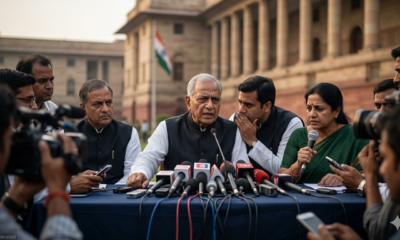
A special sitting of Parliament on Friday witnessed intense debate in the Lok Sabha over key constitutional amendments related to women’s reservation and delimitation, with Shiromani Akali Dal (SAD) leader Harsimrat Kaur Badal stating that women have reached Parliament without reservation and opposing the linkage of reservation with delimitation. The House is scheduled to vote on the Bills at 4 p.m., making the outcome politically significant.
Debate Intensifies Ahead of Voting
The Lok Sabha continued discussions on three major Bills, including amendments to the Women’s Reservation Act and proposals enabling a fresh delimitation exercise. Speaker Om Birla confirmed that voting would take place later in the day, with Union Home Minister Amit Shah expected to respond to the debate.
Prime Minister Narendra Modi earlier appealed to Members of Parliament to support the amendments, stating that the move would empower women and strengthen democratic participation.
Harsimrat Kaur Badal Raises Concerns
Speaking during the debate, Harsimrat Kaur Badal questioned the government’s approach, particularly the decision to link women’s reservation with delimitation.
- She said democracy requires equal representation for all States.
- She asserted that women have already entered Parliament without reservation.
- She demanded immediate implementation of reservation within the current strength of the House.
“We reached Parliament without reservation,” she remarked, adding that the government should not delay implementation by tying it to a future delimitation exercise.
Opposition Voices Strong Objections
Leader of Opposition Rahul Gandhi strongly criticised the proposed amendments, alleging that they aim to alter India’s electoral map rather than empower women. He described the move as a “panic reaction” and claimed it could reduce representation for southern, northeastern, and smaller States.
Rahul Gandhi asserted that the Opposition would oppose the Bill and attempt to defeat it in the House. Other Opposition leaders echoed similar concerns, arguing that delimitation could disrupt the federal balance and disproportionately affect certain regions.
DMK leader A. Raja and Congress MP Hibi Eden warned that linking delimitation with reservation could lead to regional disparities, while TMC MP Kalyan Banerjee said women’s reservation should be implemented independently.
Government Defends Proposal
The government rejected these allegations, maintaining that the proposed changes would not harm any State’s representation. Prime Minister Modi and Home Minister Amit Shah have assured Parliament that the proportional share of southern States would remain intact even after delimitation.
According to the government, the number of Lok Sabha seats in southern States is expected to increase in absolute terms, with their percentage share seeing a marginal rise.
Union Minister Annapurna Devi also defended the Bills, accusing the Opposition of undermining the aspirations of women seeking greater political representation.
Background: Women’s Reservation and Delimitation
The Women’s Reservation Act, passed in 2023, provides for 33% reservation for women in Parliament and State Assemblies. However, its implementation has been tied to delimitation based on updated census data.
The current debate revolves around:
- Whether reservation should be implemented immediately or after delimitation
- Concerns over potential changes in political representation across States
- Questions about the timing of notifying the 2023 law amid ongoing amendments
[Read more: INTERNAL LINK PLACEHOLDER]
Political Significance of the Vote
The outcome of the vote is expected to have far-reaching implications for India’s electoral structure and gender representation in politics. While the government frames the amendments as a historic step for women’s empowerment, the Opposition views them as a structural shift with political consequences.
The debate also reflects broader tensions over federalism, representation, and electoral reforms.
[Also read: INTERNAL LINK PLACEHOLDER]
FAQ
What did Harsimrat Kaur Badal say in Parliament?
She opposed linking women’s reservation with delimitation and said women have already reached Parliament without reservation.
What are the key Bills being discussed?
The Lok Sabha is debating amendments to the Women’s Reservation Act and a Bill enabling fresh delimitation of constituencies.
Why is delimitation controversial?
Opposition parties argue it could alter representation among States, potentially disadvantaging southern and smaller regions.
When will the voting take place?
Voting on the Bills is scheduled for 4 p.m. on April 17, 2026.



India News
Riniki Bhuyan passport row: What Indian law says on dual citizenship and multiple passports
Riniki Bhuyan passport controversy sparks debate on India’s dual citizenship laws and rules on holding multiple passports under the Citizenship Act.

Riniki Bhuyan passport row: What Indian law says on dual citizenship and multiple passports
Last Updated: April 6, 2026, 3:00 PM IST
The controversy surrounding Riniki Bhuyan Sharma, wife of Assam Chief Minister Himanta Biswa Sarma, has reignited a national discussion on India’s strict laws governing citizenship and passports. The issue surfaced after Congress leader Pawan Khera alleged that Bhuyan Sharma holds multiple foreign passports, raising questions about the legality of dual citizenship and possession of more than one passport under Indian law.
The allegations, made during a press conference on April 6, were strongly denied by Sarma, who termed them “fabricated” and politically motivated. He also warned of legal action against those making the claims. The episode has since drawn public attention to what Indian laws actually permit regarding citizenship status and passport ownership.
What triggered the passport row?
According to claims cited in reports by Hindustan Times, it was alleged that Riniki Bhuyan Sharma holds passports from the United Arab Emirates, Antigua and Barbuda, and Egypt, with validity extending between 2027 and 2031. No official confirmation of these claims has been made.
The Assam Chief Minister rejected the allegations outright, stating that the documents referenced were fake and part of a political campaign. He further indicated that legal recourse would be pursued to address the accusations.
Does India allow dual citizenship?
India does not permit dual citizenship under its current legal framework. The provisions are clearly defined in the Citizenship Act, 1955:
- Section 9 states that an Indian citizen automatically loses citizenship if they voluntarily acquire the citizenship of another country.
- The Constitution of India also does not allow an individual to simultaneously hold Indian and foreign citizenship.
This means that once a person acquires a foreign passport, they are no longer legally considered an Indian citizen.
Can a person hold multiple passports in India?
The law is equally strict when it comes to passport ownership. Under the Passports Act, 1967:
- Holding more than one valid passport is generally prohibited.
- Authorities can impound or revoke passports if found to be obtained fraudulently or held unlawfully.
- Section 12 prescribes penalties for misrepresentation, concealment of facts, or misuse of passports.
Additionally, Indian rules treat possession of a foreign passport as evidence of foreign citizenship. This position has also been upheld by the Supreme Court in past judgments.
As a result, an individual cannot legally hold both an Indian passport and a foreign passport at the same time.
What is the OCI scheme and how is it different?
India offers a limited alternative through the Overseas Citizenship of India (OCI) scheme, introduced under Section 7A of the Citizenship Act.
- OCI provides a lifelong visa to persons of Indian origin who have acquired foreign citizenship.
- It allows them to live and work in India without restrictions on duration.
- However, OCI status does not grant political rights such as voting or contesting elections.
OCI holders are also subject to certain conditions, including restrictions on activities like research, missionary work, or mountaineering without prior permission.
Legal consequences of holding multiple passports
Indian authorities treat cases of multiple passport possession seriously due to potential security concerns. In recent years, the government has identified over 1,300 instances of individuals holding more than one Indian passport.
In such cases, the consequences may include:
- Cancellation or impounding of passports
- Criminal prosecution under the Passports Act
- Fines or imprisonment depending on the severity of the violation
The law also considers any attempt to conceal foreign citizenship while retaining an Indian passport as a punishable offence.
Why the issue matters
The Riniki Bhuyan passport row has highlighted the importance of clarity around citizenship laws, particularly in an era of increased global mobility and investment-linked citizenship programmes offered by several countries.
Legal experts note that India’s position remains unambiguous: citizenship and passport rights are tightly linked, and any deviation can invite strict legal consequences.
The controversy also underscores the political sensitivity of such allegations, especially when they involve public figures. While the claims remain disputed, the broader debate has brought renewed focus on compliance with citizenship laws.
[Internal Link Placeholder: Understanding India’s citizenship laws explained]
[Internal Link Placeholder: Recent cases involving passport violations in India]
FAQs
Can an Indian citizen legally hold two passports?
No, Indian law does not allow an individual to hold more than one valid passport at the same time.
What happens if someone acquires foreign citizenship?
They automatically lose Indian citizenship under Section 9 of the Citizenship Act, 1955.
Is OCI the same as dual citizenship?
No, OCI is not dual citizenship. It only provides residency and travel benefits without political rights.
What penalties apply for holding multiple passports?
Penalties may include passport cancellation, fines, and legal action under the Passports Act, 1967.
India News
Security Breach at Delhi Assembly Complex After Car Breaks Through Gate, Leaves Bouquet
A masked man breached Delhi Assembly security by driving through a VIP gate and leaving a bouquet before fleeing, prompting a high-level police probe.

Security Breach at Delhi Assembly Complex After Car Breaks Through Gate, Leaves Bouquet
Last Updated: April 6, 2026, 4:30 PM IST
A major security breach was reported at the Delhi Legislative Assembly complex in New Delhi on Monday afternoon when a masked man drove a car through a restricted VIP gate, entered the premises, placed a bouquet near the porch, and fled. The incident, which occurred around 2 pm, has raised serious concerns over security protocols at one of the capital’s most sensitive government sites.
What Happened at the Assembly Complex
According to initial reports, the unidentified individual drove a white Tata Sierra SUV into Gate 2 of the Delhi Vidhan Sabha complex, a gate typically reserved for VIP access. The man reportedly rammed through both an iron gate and a boom barrier before entering the premises.
After driving inside, he stepped out of the vehicle, walked toward the porch area, and placed a bouquet near a parked vehicle believed to be associated with Speaker Vijender Gupta. He then returned to his car and exited the premises, again damaging security infrastructure on his way out.
The unusual nature of the act, combined with the breach itself, has prompted a high-alert response from security agencies.
Police Response and Investigation
Delhi Police officials confirmed that bomb disposal squads and forensic teams were immediately deployed to the scene. A thorough search of the premises was conducted, but no suspicious materials were found.
- The vehicle used in the breach carried a Uttar Pradesh registration number.
- Police identified the car as registered to a person named Sarbjit Singh.
- Authorities are yet to confirm whether the registered owner was driving the vehicle.
Senior police officials, including Special Commissioner (Special Cell) Anil Shukla and Special Commissioner (Law and Order) Ravindra Yadav, reached the site to oversee the investigation.
Officials are also questioning security personnel stationed at Gate 2 and other staff present during the breach to determine how the vehicle was able to enter without immediate interception.
Eyewitness Account and External Incident
In a related development, police are speaking with a rickshaw-puller who claimed he was struck by the same vehicle outside the complex shortly after the breach, around 2:15 pm. This has added another dimension to the investigation, raising the possibility of reckless driving or intentional evasion.
Authorities are reviewing CCTV footage from the area to trace the vehicle’s route before and after the incident.
Security Concerns and Broader Implications
The breach has highlighted potential vulnerabilities in the security framework of the Delhi Assembly complex, especially at entry points designated for high-profile movement. Experts note that such zones typically have layered security, including vehicle checks, armed personnel, and surveillance systems.
The fact that a vehicle could forcefully enter and exit the premises during daytime hours without immediate containment has triggered questions about response time and preventive measures.
[Internal Link Placeholder: Read more on security upgrades at government buildings]
Background and Context
The Delhi Legislative Assembly is a high-security zone given its political significance and regular presence of lawmakers, officials, and staff. Incidents involving breaches, even if non-violent, are treated with utmost seriousness due to potential risks.
While no injuries or explosives were reported in this case, the symbolic act of leaving a bouquet has added an element of mystery to the incident. Investigators are exploring whether the act was a form of protest, a personal message, or intended to test security preparedness.
[Internal Link Placeholder: Previous incidents of security breaches in Delhi]
Ongoing Probe and Next Steps
Police officials stated that efforts are underway to identify and apprehend the suspect. The vehicle registration details are being verified, and multiple teams have been deployed to track down the individual.
Further updates are expected as the investigation progresses and more details emerge regarding the motive behind the breach.
FAQ
What exactly happened at the Delhi Assembly complex?
A masked man drove a car through a VIP gate, entered the premises, placed a bouquet near the porch, and fled, damaging security barriers.
Was any explosive or dangerous material found?
No, bomb disposal squads conducted a search and found nothing suspicious at the site.
Who owns the vehicle used in the incident?
The car is registered to a person named Sarbjit Singh, though it is not yet confirmed if he was driving.
Why is this incident significant?
The breach raises concerns about security at a high-profile government location and highlights potential gaps in surveillance and response systems.
Source: Hindustan Times
India News
Bhagwant Mann Calls Raghav Chadha ‘Compromised’ Amid AAP Leadership Changes
Punjab CM Bhagwant Mann calls Raghav Chadha ‘compromised’ after his removal as AAP’s Rajya Sabha deputy leader, highlighting internal party discipline.

Bhagwant Mann Calls Raghav Chadha ‘Compromised’ Amid AAP Leadership Changes
Last Updated: April 04, 2026, 12:03 PM IST
Punjab Chief Minister Bhagwant Mann on April 4, 2026, described Aam Aadmi Party (AAP) Rajya Sabha MP Raghav Chadha as “compromised” during a press conference in Chandigarh, following the latter’s recent removal as the party’s deputy leader in the Upper House. The remark comes amid ongoing internal adjustments within the party’s parliamentary leadership and has drawn attention to AAP’s emphasis on party discipline.
Responding to a direct question on whether he believed Chadha had been compromised, Mr. Mann answered in the affirmative. The statement marks one of the strongest public comments from a senior AAP leader regarding Chadha’s position since his removal from the key parliamentary role.
Leadership Changes Within AAP
Addressing the issue of Chadha’s removal, Mr. Mann maintained that such decisions are routine within political parties and are taken collectively. He stated that leadership positions, including those in Parliament, are subject to change over time depending on the party’s strategy and requirements.
“Parties keep changing their leader and deputy leader in Parliament. These are party decisions and happen from time to time,” he said, citing examples from his own political journey to underline that such transitions are not unusual.
The development follows AAP’s decision to replace Chadha as deputy leader in the Rajya Sabha, a move that has been widely interpreted as a shift in the party’s internal dynamics. [Read more: Internal developments in AAP leadership]
Emphasis on Party Discipline
Mr. Mann also highlighted the importance of maintaining unity and adhering to the party line, particularly during parliamentary proceedings. He stressed that opposition parties often take collective decisions on matters such as walkouts or policy opposition.
He warned that any deviation from such decisions could invite disciplinary action, pointing to the significance of the party whip in ensuring cohesion.
- Opposition parties often act collectively in Parliament
- Members are expected to follow agreed strategies
- Violating the party whip can lead to disciplinary action
“If any individual does not support these collective decisions and goes against the party line, then it is against the party whip. If anyone goes against the party whip, action will be taken,” Mr. Mann said.
Background: Chadha’s Role in AAP
Raghav Chadha has been one of AAP’s prominent faces, particularly in Parliament, where he played a key role in articulating the party’s positions on national issues. His rise within the party was often seen as part of AAP’s strategy to project a younger leadership profile.
However, recent developments indicate a shift in his standing within the party. His removal as deputy leader in the Rajya Sabha has raised questions about internal differences or strategic recalibration by the leadership.
While the party has not officially detailed the reasons behind the change, statements from leaders like Mr. Mann suggest that adherence to collective decisions and internal discipline may have been factors.
[Also read: Understanding party whip and parliamentary discipline in India]
Political Significance
The remarks by the Punjab Chief Minister are significant as they come at a time when AAP is expanding its political footprint beyond Delhi and Punjab. Maintaining internal unity and discipline is seen as crucial for the party’s national ambitions.
Political observers note that public statements from senior leaders can influence perceptions of cohesion within the party. Mr. Mann’s comments may also signal a firm stance by the leadership on issues of compliance and accountability.
At the same time, the absence of a detailed explanation from the party leadership leaves room for speculation about the underlying reasons for Chadha’s removal. Analysts suggest that such developments are not uncommon in political parties undergoing organisational evolution.
Balanced Perspective
While Mr. Mann’s remarks indicate dissatisfaction with Chadha’s conduct, the latter has not publicly responded to the “compromised” comment at the time of writing. Without an official statement from Chadha or a detailed clarification from the party, the full context of the issue remains unclear.
Political experts caution against drawing definitive conclusions based solely on internal remarks, noting that leadership changes often involve multiple factors, including strategy, performance, and alignment with party objectives.
Conclusion
The characterization of Raghav Chadha as “compromised” by Bhagwant Mann underscores the importance AAP places on discipline and collective decision-making. As the party navigates its evolving political landscape, such developments highlight the challenges of balancing individual roles with organisational priorities.
Further clarity is expected as the party leadership or Chadha himself responds to the developments in the coming days.
FAQs
Why did Bhagwant Mann call Raghav Chadha ‘compromised’?
Bhagwant Mann made the remark in response to a question at a press conference, suggesting concerns about adherence to party decisions, though no detailed explanation was provided.
What position did Raghav Chadha hold in AAP?
Raghav Chadha was the deputy leader of AAP in the Rajya Sabha before being recently removed from the role.
What is a party whip?
A party whip is a directive issued by political parties to ensure members vote or act according to the party’s decisions in legislative bodies.
Has Raghav Chadha responded to the remarks?
As of now, there has been no public response from Raghav Chadha regarding Bhagwant Mann’s statement.


Samsung Promotes #AwesomeDurability Campaign Highlighting Smartphone Protection Features

Bhooth Bangla Review: Akshay Kumar Returns to Comedy-Horror with Priyadarshan’s Entertaining Blend

Political Exchange Intensifies as BJP Leaders Criticise DMK Over Allegations and Representation Debate

CBI arrests MCD deputy commissioner Abhishek Kumar Mishra in ₹4 lakh bribery case

Andhra Pradesh Budget 2026: ₹3.32 Lakh Crore Mega Outlay Announced, ₹8.3 Crore Earmarked for VB G RAM-G Scheme

T.N. CM Stalin’s Surprise Bonanza: ₹5,000 Credited to Bank Accounts of 1.31 Crore Women Today
-
 India News3 weeks ago
CBI arrests MCD deputy commissioner Abhishek Kumar Mishra in ₹4 lakh bribery case
-
 Politics2 months ago
Andhra Pradesh Budget 2026: ₹3.32 Lakh Crore Mega Outlay Announced, ₹8.3 Crore Earmarked for VB G RAM-G Scheme
-
 Politics2 months ago
T.N. CM Stalin’s Surprise Bonanza: ₹5,000 Credited to Bank Accounts of 1.31 Crore Women Today
-

 Tech1 month ago
Instagram Privacy Shock: Meta to End End-to-End Encryption for Chats After May 2026
-

 India News1 month ago
PM-KISAN 22nd Installment Released: PM Narendra Modi Transfers Funds to Over 9 Crore Farmers from Guwahati
-

 Business2 months ago
Nvidia CEO Jensen Huang Skips India AI Summit Next Week, Company Confirms—What It Means for India’s Tech Ambitions
-

 Sports1 month ago
Kelme India Sparks New Era in Indian Sports: Global Brand’s Entry Signals Big Boost for Athletes and Performance
-

 Politics1 month ago
#नवनिर्माण_के_9वर्ष: From ‘Monk’ to Economic Architect—Yogi Adityanath Sets $1 Trillion Vision for Uttar Pradesh by 2029-30